Acts 17:22-31
The sanitized version of the modern American family has a two-parent household, both working, yet with time and energy to spare to run the kids to soccer matches and rehearsals for the middle school musical.
Alas, that is far from reality, as I have mentioned before. For far too many, work is slightly terrifying, their family’s healthcare depending on employment that could disappear in a moment. If they manage to get to little Saanvi’s soccer game at all, they’ll be in the parking lot smashing zero on a phone tree, praying for an actual human to pick-up so they can deal with that inexplicable NYSEG bill or insurance claim denial. They totally missed that amazing goal which, unfortunately, little Saanvi scored for the opposing team.
By the weekend, Mom and Mom are exhausted, and are likely not attending worship in any tradition. Little Saanvi is not growing up with stories of Moses or the Apostle Paul, Krishna or Siddhartha. And even those stressed out over-scheduled and besieged family systems are becoming a rarity, as many are opting out of marriage and kids altogether because this economy is pretty much impossible.
Recent research shows that we at The Park Church are bucking a national trend. As we become more demographically diverse, in some ways becoming a better reflection of our surrounding community, church as a whole is as out of reach for most Americans as that eponymous dream, hard work, your own home, and a safe retirement. The Americans most likely to attend Christian worship have a master’s degree and an income somewhere between $60-100k annually. City of Elmira households, at less than $46k annually, are well below that figure, and significantly less than Chemung County residents outside of the city.
At least, before trickle-up economics, most children raised in Christian households got some basic Bible stories, even if we belonged to a church that was more liturgical than biblical. What has been missing pretty universally, even before the enshittification of America, was an understanding of the historic context of scripture. We interpret the Bible as fables when we are kids and through the lens of our own context as adults, and that simply doesn’t work. The ancient authors were writing for adults in their own context, not ours.
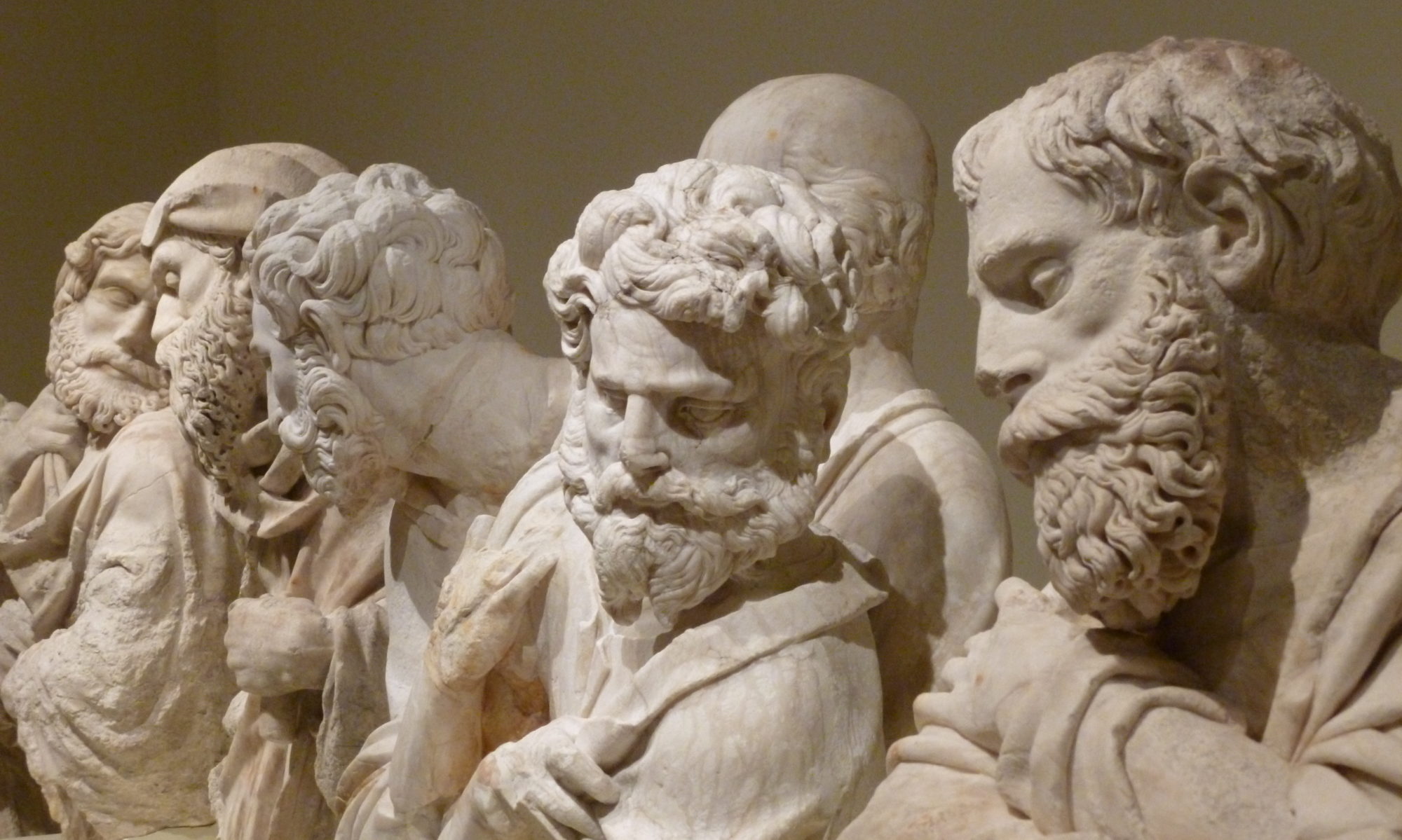
Today’s reading from the Acts of the Apostles is an example of missing context. For some, it is just one more story of Paul’s journeys. But we don’t see texts like 2nd Athenians, or hear about a church in Athens. We might assume that Paul’s missionary activity in the home of classic Greek philosophy failed. But the story is not as simple as a clash between the gospel and classic Greek philosophy.
Paul is an apocalyptic Jew in the Pharisaic tradition, but he was also raised in an educated Hellenized context, in a center of Greek learning called Tarsus. Paul’s letters, so essential to the formation of Christianity, use formal rhetoric, a style of argumentation he would have learned from the Greeks, a style of argumentation he would have used that day debating the philosophers in the Areopagus, the marketplace of ideas in Athens. He would have been fluent and comfortable in that environment.
Our modern categories simply don’t work in that ancient context. By and large, we think of people as having one religion, if they have any at all. Sure, we all know people who grew up in households with two different religions, probably know folks who cross religious boundaries, especially where religion and ethnicity are blurred, but generally we say things like “She’s Catholic” or “He’s a Presbyterian.” In Christian Testament times, this wasn’t the case. People could and often did understand themselves as being adherents of multiple religions, hedging their bets. The religious landscape was always shifting, with Rome tolerating new religions imported from the far reaches of the empire. The only thing Rome forbid was secrecy, which might be politically subversive, so the authorities often suppressed “mystery cults.”
No matter how you identified, you were still expected to make sacrifices at the temple of the imperial cult, to a deified Caesar or the deity from the Greco-Roman Pantheon attached to a particular town. You might participate in a supper club dedicated to the hybrid sun-god Serapis on Wednesday and sacrifice at the temple of Hera on Friday. For this reason, what we think of as religions did not prostheletize.
The one religion that insisted on exclusivity was Judaism. This was tolerated only because it was an ancient religion. There were Jews everywhere, a diaspora that started with the fall of the Northern Kingdom in the 8th century B.C.E. And though we now think of Judaism as primarily insular, it did evangelize right up until the First Jewish War in 66 C.E., though circumcision was a bit of a tough sell.
Christianity was also exclusive, but not ancient, which created conflict. Paul and the Acts of the Apostles report that he faced hostility during his missionary journeys, from Jews who considered the idea that the messiah could be found in a man tried and executed by Rome to be heretical, and by Gentiles who thought Christians were dangerous to the divine order and possibly the political order.
But in the Areopagus in Athens, Paul likely faced advocates for ways of living we put in another box, one we call “philosophy,” a word which means “love of wisdom.” That city was associated with Socrates, Plato, and Aristotle, thinkers that were studied until very recent decades, though they have all been dead for over 23 centuries. These men, however, were not in the conversation during the time of Paul. Instead, schools of philosophy that developed soon after the death of Aristotle dominated, with Epicureans and Stoics the most famous factions, though there were others, like the Cynics. These words, once used to describe adherents of these specific philosophical movements, are used today as adjectives to describe someone’s character.
Unlike other religions, and like both Judaism and Christianity, the philosophical schools were exclusive, and actively sought converts. You could be an Epicurean or a Stoic, not an Epicurean and a Stoic. They believed in one or more gods, though the Epicureans believed the gods did not involve themselves in earthly matters. They believed in a mechanistic world much like later Enlightenment thinkers. All philosophical schools taught a way to live. For example, the Stoics emphasized logic, again like the thinkers of the Enlightenment, and virtue, which the Enlightenment claimed, despite evidence to the contrary. Self-control was everything to the Stoic. We have appropriated the name of the school to describe someone who doesn’t complain in the face of discomfort and bad luck.
It quickly becomes apparent that the religion box and the philosophy box are almost identical in practice, trying to explain our experience of the world, answer the big questions, and prescribe a way of life.
Paul brings a particular urgency to his mission, for he believes the resurrection of Jesus marks the beginning of the end, that God is already acting in the world to punish the wicked, reward the faithful, and restore an earthly order that reflects the kin-dom of God. Jesus believed the same thing, though we can argue that he believed that God’s just and caring kin-dom was already present and actively growing in the world, a treasure to be found in a field, a tiny mustard seed growing into a huge bush.
Christianity borrowed more from Greek philosophy than most preachers dare to admit. Greek methods of argumentation and classification show up in the passionate and sometimes violent debates that defined orthodox belief. By the Middle Ages, we would start to see “systematic” theologies, like the Summa Theologica of Thomas Aquinas, completed in 1274 C.E. John Calvin’s “Institutes of the Christian Religion,” first published in 1536 C.E., was one of the first systematic theologies in our own Reform tradition.
Every philosophical school, every systematic theology, has one thing in common. They try to provide a convincing and logical explanation for life, the universe, and everything, and the answer is way more complicated than 42. Maybe, like the characters in Douglas Adams’ “Hitchhiker’s Guide to the Galaxy” series, we might do better to wonder about the questions.
Paul, of course, was wrong. The divine reordering of the world, the resurrection of the dead and Day of Judgment for all people, did not happen. His counsel to just stay where you are and wait for it has become a Christian false consciousness for the oppressed, a promise that if they are willing to suffer now, they will be rewarded later. I don’t know about that. The prophets don’t tell the people of God to sit around and wait. They say “do justice” and “let justice flow like a mighty stream.”
All of these systems, religions or philosophies, are just houses made of straw, even when located in an immense and ancient structure. For a God worthy of that title cannot be reduced to a system. We do not know ourselves. How can we claim to fit holy mystery into a book or creed. God won’t even stay the same throughout the Jewish and Christian Testaments, the authors and prophets various in their encounters and interpretations.
And there are so many religions and philosophies we call by other names, some useful, filled with beauty and truth, so many of them deadly, like the notion that selfishness, individual and tribal, is the only real human motivation. Like the notion that humans are a category apart from our sisters and brothers in the life of this planet, the animals and plants, the living planet itself. Like the notion that we can stick people in boxes and borders and expect them to stay there.
And don’t get me started on the false religion of consumer capitalism. We have daily evidence that money and power buy misery, not joy.
If the holy won’t stay put in our theological boxes, why would you expect creation to do so?
The systems, religions, and philosophies are tools. They are not the house in which we dwell. And sometimes the right tool is the sledgehammer, as we demolish that which is no longer useful, making way for what is new.
What must be demolished, in your life, in our nation, in our faith, to make room for the holy, for yes, for life?
PRAYERS OF THE PEOPLE concluding with the Lord’s Prayer
Let us pray.
Most Amazing God,
You are mystery and source,
Mother and Father of us all.
We pray this morning in thanks
for those who have nurtured us,
provided care and support
when we were vulnerable,
as children and as adults,
finite and fragile.
We pray for those called to nurture and protect
in a violent world,
in the midst of un-civil wars,
and corporate terror,
for parents and grantparents,
auntie and uncles,
teachers and social workers,
for those gently cupping
a candle of hope.
We pray for healthcare providers,
remembering that ancient story,
an unwed teenager,
a father by choice,
and pray as Jesus taught us,
not to his earthly father,
but to the one he called Abba, saying:
Our Father…