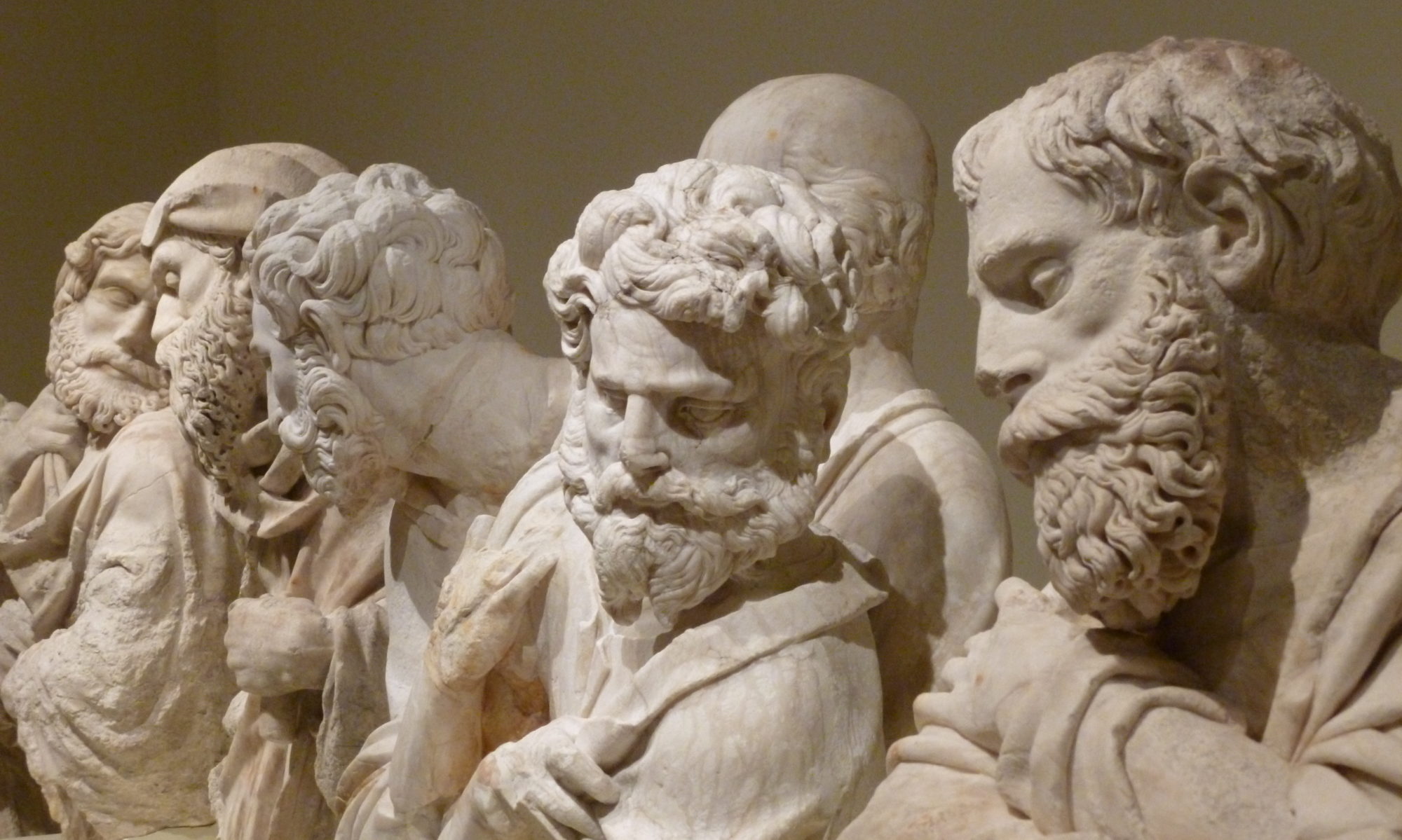
2 Timothy 4:6-8, 16-18
Sermon:
Shohei Ohtani was already considered by some to be the greatest baseball player who has ever lived. He is certainly the greatest player since George Herman Ruth, aka Babe Ruth, pitched and slugged his way into the history books. Take, as an example, a game nine days ago, in the National League Championship series between Ohtani’s team, the Los Angeles Dodgers, and the Milwaukee Brewers. Ohtani pitched six innings, with ten strike outs, two hits, and no runs. He did okay in the batter’s box too. To be precise, he hit three home runs in three at bats, one clearing the awning over the bleachers in the center field of Dodger Stadium. The Japanese call boys who are completely focused on baseball Yaky? Sh?nen. I think at this point, Ohtani is well beyond “baseball boy.” The word legend comes to mind.
Some athletes change their entire sport, among them, Michael Jordan in basketball and Kelly Slater in surfing. Some, and Ohtani seems to be among them, are unicorns, one-offs who defy all the norms of their sport or, you know, physics and physiology.
Elbie Fletcher was a unicorn of sorts in his day too, or at least the fastest little pony in the unicorn pen. The Boston Braves held a contest in 1934 to identify the local high school baseball player most likely to make it to the Major Leagues. Fletcher won the contest, attended training camp, and actually made the team. He went on to play for twelve seasons, was a decent if unremarkable hitter, and had a remarkable .993 fielding percentage at first base.
His first year in the Major Leagues also happened to be the last year Babe Ruth played. The Great Bambino was back in Boston after fourteen seasons with the Yankees. Fletcher would describe the experience:
“He still had that marvelous swing, and what a follow-through, just beautiful, like a great golfer. But he was forty years old. He couldn’t run, he could hardly bend down for a ball, and of course he couldn’t hit the way he used to. One of the saddest things of all is when an athlete begins to lose it … and to see it happening to Babe Ruth, to see Babe Ruth struggling on a ball field, well, then you realize we’re all mortal and nothing lasts forever.”
Shohei Ohtani may have an amazing and long career, like his compatriot Ichiro Suzuki, or the “Iron Man,” Cal Ripken Jr. But in the end, he, like Babe Ruth, will prove to be mortal. Like me. Like you.
In today’s reading from the text traditionally called Paul’s Second Letter to Timothy, the apostle is facing his own mortality.
Now, to do our wonkish “taking scripture seriously enough to study it” thing, I must inform you that Second Timothy is probably not an authentic Pauline text, at least not in the form we have received. It was common in those days to produce pseudepigraphic works, a fancy way of saying texts that use false authorship to establish their authority. The gospels attributed to Matthew and John most certainly fall into this category, as do all of the short letters known as the Pastoral Epistles.
Second Timothy is especially problematic for thinking Christians, for the selective literalists who call themselves “Fundamentalist” base their heresy on one sentence, labeled Chapter 3, Verse 16-17 in our current numbering system. It reads:
“Every scripture is inspired by God and is useful for teaching, for showing mistakes, for correcting, and for training character, so that the person who belongs to God can be equipped to do everything that is good.”
If the passage was authentic and authoritative, it could not refer to the Christian Testament, which did not exist in Paul’s lifetime. And of course, selective literalists ignore passages they find inconvenient, passages that prohibit cheeseburgers and demand economic justice.
Scripture tells us that that the Jewish Council in Jerusalem sought Paul’s death, that he was arrested and held by the Roman governor at their insistence, and that Paul appealed to the Emperor by right of his Roman citizenship.
The Acts of the Apostles recounts his journey to Rome in the custody of imperial officials, tells us of a spectacular shipwreck and time spent on Malta. That text ends by telling us that the Roman Jews were divided over what to do about Paul, and he remained under house arrest for two years. No mention is made of a Roman trial and execution. Legend claims he was a martyr, and some scholars believe he was dead by 60 C.E. We do know Nero blamed the Great Fire of Rome in 64 C.E. on Christians, leading to a spasm of persecution.
In Second Timothy, Paul says “As for me, I am already being poured out as a libation, and the time of my departure has come. I have fought the good fight; I have finished the race; I have kept the faith.”
This feels wrong to me, for throughout most authentic texts, Paul seems confident in his message and in his eventual acquittal. But operating in the world of this text, Paul is saying goodbye to Timothy, his frequent co-worker in the mission field. He is going out with grace.
We don’t all have that opportunity. Infirmity and disaster may strip us of our dignity in our final moments.
I get asked about death a lot as a pastor, have journeyed with individuals and families through the final months and days, sometimes through the final minutes and hours. Only one time have I offered easy answers, answers I did not actually believe.
It was my very first deathbed, during my second year at Divinity School, while on call at the Boston hospital where I was completing my clinical training. I was half asleep when I arrived in the ICU, the family mostly cried out, the dim lights making everything blue, including the patient in his last moments.
I grabbed a Bible, read the family First Thessalonians 4, the text used in most funerals and memorial services, our deceased flying up in the air to meet Christ at the Second Coming.
Paul’s First Letter to the Church at Thessaloniki is likely the earliest extant text from the Christian era, written around the year 52 C.E., and is accepted as authentic. I was analyzing that very same passage as a seminar assignment for the world’s foremost Pauline scholar. I knew it was the coward’s way out, scripture out of context to support the folk tales we have constructed as our religion. I swore that in the future, I would be compassionate but honest, that I would not fear death, but would live in the present tense and, sometimes, the tense present.
What comes next? I don’t know.
I know that the Pharisees developed a theology of life after death a couple of centuries before Jesus because the old transactional theology simply didn’t work. Bad people sometimes thrived, good people sometimes suffered, so maybe our reward happened in another life. That doesn’t mean its not true. It doesn’t mean it is.
Some of the texts we translate to mean life after death actually say life in full. But Jesus is recorded as teaching his followers about life with God after life here on earth.
I guess I’ll find out. Or won’t. But I’m not going to waste the days that I have obsessing over it.
I believed in practical Christianity long before I came to The Park Church. Our biological purpose and our spiritual purpose are not so far apart when you zoom out and consider us as a species. Justice and love and humility are how we contribute to the thriving of us, the child having seizures by the fire, the man who was mugged… wounded in the ditch, the widow who is down to her last containers of flour and oil.
In our imagination and creativity, we align ourselves with the mystery, the power that we call God. Our purpose is not to stroke the ego of a domestic abuser in the sky. Our purpose is to be useful and to create. And if there is a heaven of some sort, or karma and reincarnation, that should check the boxes.
Though, for the record, if there is reincarnation, I’m aiming to come back as a Golden Retriever, because who wouldn’t want that kind of joy?
There is a degree of randomness in the system, a requirement for life, so not every life can be measured by usefulness and creativity. Some people are broken, unable to love, and so they break others in turn.
Our definition of thriving has required some significant adjustment in recent years, as we recognize that our relentless energy and toxic humans with diseased spirits have put life itself, human life and the life of the planet, at risk. We’ve had to realize that not only is the victim in the ditch our sibling, not only is the Samaritan that comes to his aid, but so too is the fox running through the field, the one lost sheep and the shepherd who is searching.
We hope to die well, but first we must live well. We tell the stories of extraordinary people, of Babe Ruth and Annis Ford Eastman and Harvey Milk, and of ordinary people, the people who are part of our personal story, those with pictures on our ofrenda, and those we hold in our hearts.
And then we do the thing. We roll up our sleeves, knead the dough, paint the porch, send an email to a cousin we haven’t connected with in awhile, wash soup kitchen dishes, and once in a while, hit a spiritual home run that sails completely out of the park. Amen.
PRAYERS OF THE PEOPLE concluding with the Lord’s Prayer
Let us pray.
Most Divine Mystery we name as God,
we pray for those caught up by the noise in the system,
the chaos and complexity that makes room for new life,
for our own clinging and fear of the unknown,
for all who fail to live fully.
We pray for those whose lives are cut short
by the insanity of war
or the every day violence
of active shooters and private equity.
We pray for protesters in frog suits in Portland
and disrupters in Chicago.
We pray for the sin sick souls
that are firing hundreds of thousands of workers,
breaking our promises of asylum,
tearing down the wrong walls,
and looting our common wealth.
Jesus lived under cruelty and corruption,
that of Rome and that of religion,
so we pray in resistance as he taught us, saying:
Our Father…